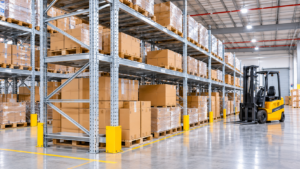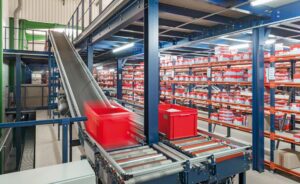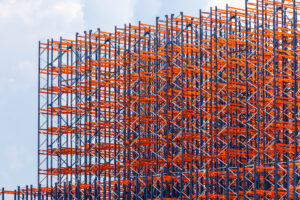
Anti-collapse mesh for pallet racking is a protective metal mesh system installed behind or alongside warehouse racks to help prevent stored goods from falling into nearby work areas, aisles, or other spaces. It is particularly useful where falling products could injure workers or damage equipment and stock. The right system depends on your racking layout, stored goods, potential hazards, and installation requirements.
If you manage a warehouse, distribution centre, retail stockroom, or small business storage facility, you may already have pallet racking installed. But have you considered what happens if a pallet shifts, a box falls, or forklift operators push goods too far back?
That is where anti-collapse mesh can make a difference.
What Is Anti-Collapse Mesh for Pallet Racking?
Anti-collapse mesh is a protective screen made from metal mesh panels and supporting frames. It is typically installed at the rear or sides of pallet racking to contain goods that might otherwise fall from elevated storage positions.
Think of it as an additional safety barrier between stored products and the area beyond the rack.
For example, imagine a warehouse storing cartons of electrical accessories on pallets several metres above the floor. If a carton slips through a gap at the back of the rack, it could fall into a walkway or another storage area. A suitably designed and installed anti-collapse mesh system UAE can help reduce this risk.
The mesh is available in different panel sizes, aperture configurations, and mounting arrangements. The appropriate option depends on the products being stored and the hazards identified during the warehouse safety assessment.
How Does Anti-Collapse Mesh Work?
The mesh forms a physical barrier that helps retain displaced goods and loose items within the intended storage area.
Depending on the application, you can mount it directly to a suitable rack structure or install it using brackets that create additional clearance behind the racking.
Remember that anti-collapse mesh is a protective measure, not a guarantee against every falling-object incident. Its effectiveness depends on correct design, compatible fixings, proper installation, and the loads and hazards it is intended to address.
Why Is Anti-Collapse Mesh Important for Warehouse Safety?
Warehouse safety involves more than making sure pallets fit neatly on the beams. Products can shift during handling, pallets can be damaged, and improperly positioned loads can create hazards for nearby workers.
Anti-collapse mesh provides an additional physical barrier where falling goods could present a risk.
Here are three important reasons businesses consider it.
- It helps protect workers. If a rack backs onto a pedestrian walkway, packing station, or work area, suitable mesh can help prevent displaced goods from reaching those spaces.
- It helps reduce product damage. Falling cartons, components, and packaged goods can cause stock losses. A correctly selected mesh system can help contain certain falling items.
- It supports better separation between storage and working areas. In suitable configurations, mesh panels can also form part of a wider warehouse guarding or partitioning arrangement.
According to WorkSafe Victoria’s pallet-racking guidance, racking design and operation must account for the dimensions and weight of stored products, the handling equipment used, and the condition of the storage system. Anti-collapse mesh should complement these measures, not replace them.
When Does Your Warehouse Need Anti-Collapse Mesh?
Not every rack installation carries the same risks. The decision should be based on the warehouse layout, the goods stored, and the consequences of products falling.
When Pallet Racking Is Near Pedestrian Walkways
This is one of the clearest situations to assess.
If workers regularly walk behind or beside a rack, falling goods could create a serious hazard. Rear or side mesh may provide an additional layer of protection where the risk assessment identifies this need.
When You Store Loose, Small, or Unstable Products
Some goods are more likely to move or fall than others.
Examples include cartons, lightweight packages, irregularly shaped products, and items stored in open containers. The mesh aperture must be appropriate for the size of the items that could fall through it.
A barrier with openings that are too large may not provide the intended protection.
When Racking Is High or Has Multiple Storage Levels
The consequences of a falling object can become more serious when products are stored at greater heights.
Warehouses with tall pallet racking should assess how loads are positioned, how pallets are handled, and whether people or equipment occupy the areas behind the racks.
When Rack Rows Are Open at the Back or Sides
Single-sided rack runs that are not positioned against a wall may expose adjacent areas to falling goods. Back-to-back installations may also need protection depending on the space between the rows, the pallet arrangement, and the likelihood of items falling through gaps.
A competent racking supplier can help determine the suitable mesh placement and mounting configuration.
What Are the Main Benefits of Anti-Collapse Mesh?
For a small business, the benefits are practical, not complicated.
- Additional falling-object protection: Helps contain goods that become displaced from storage positions.
- Improved workplace separation: Can help protect walkways and nearby work areas when correctly designed for the hazard.
- Better visibility: Open mesh can maintain visibility through the barrier while allowing airflow, depending on the design.
- Flexible installation options: Some systems can adapt to different rack layouts and be installed on existing racks after a compatibility assessment.
- Potential reduction in stock damage: Helps reduce the risk of certain products falling into neighbouring areas.
However, mesh should never be treated as permission to overload racks, use damaged pallets, or continue unsafe forklift practices.
How Do You Choose the Right Anti-Collapse Mesh?
Choosing the right system starts with understanding what you need to protect and where the risk exists.
1. Assess the Stored Goods
Consider the size, shape, weight, and packaging of the products.
Small items may require smaller mesh openings, while heavier or more hazardous loads may need a specifically engineered containment system. Do not select a product based on appearance alone.
2. Check the Racking Layout
Measure the rack height, bay widths, and relevant clearances. Identify whether protection is needed at the rear, sides, or within a back-to-back rack arrangement.
The mounting method should be compatible with the existing racking system and its design.
3. Confirm the Required Strength and Fixings
Ask the supplier for the system’s technical specifications, intended application, and relevant test information. Confirm that the panels, brackets, supports, and fixings suit the identified hazards.
Do not assume that every mesh panel can withstand the same impact.
4. Consider Installation and Maintenance
Installation should follow the manufacturer’s instructions and be carried out by a competent provider. Avoid drilling, welding, or otherwise modifying rack components without the required technical approval.
After installation, include the mesh and its fixings in routine inspections. Look for bent panels, loose brackets, damaged connections, corrosion, and other signs that could affect performance.
For broader pallet-racking safety practices, see WorkSafe’s guidance on pallet racking operation and maintenance.
What Mistakes Should You Avoid When Installing Anti-Collapse Mesh?
A safety product can create a false sense of security if it is used incorrectly. Avoid these common mistakes:
- Choosing mesh with unsuitable openings: Small products may pass through openings that are too large.
- Ignoring pallet overhang: The mesh position must account for the rack design, pallet dimensions, and required clearances.
- Using mesh as a pallet stop: Anti-collapse mesh is not a substitute for an appropriately designed pallet backstop.
- Ignoring rack damage: Mesh does not restore the structural integrity of bent uprights, damaged beams, or overloaded racks.
- Installing incompatible components: Panels and fixings must suit the existing racking and the intended application.
- Overlooking fire protection: Check that the proposed installation is compatible with the warehouse’s sprinkler system and applicable fire-safety requirements.
Correct pallet positioning, load management, forklift training, and regular inspections remain essential even after mesh has been installed.
Frequently Asked Questions About Anti-Collapse Mesh
1. What is anti-collapse mesh for pallet racking?
Anti-collapse mesh is a protective metal mesh screen installed behind or alongside pallet racking to help prevent displaced goods from falling into nearby areas.
2. When does a warehouse need anti-collapse mesh?
It should be considered when falling goods could injure people, damage equipment, or enter pedestrian walkways and neighbouring work areas. The final decision should follow a site-specific risk assessment.
3. Where should anti-collapse mesh be installed?
Common locations include the rear of pallet racking and selected sides where goods could fall beyond the rack. The correct position depends on the rack layout, stored products, and identified hazards.
4. Is anti-collapse mesh the same as wire mesh decking?
No. Anti-collapse mesh acts as a protective barrier to prevent goods from falling. Wire mesh decking is installed on rack beams to support stored items when the decking is designed and rated for that application. The two products serve different purposes.
5. Can anti-collapse mesh be installed on existing pallet racks?
Yes, some systems can be retrofitted to existing racks. However, compatibility, mounting arrangements, clearances, and the original rack design must be checked before installation.
6. Does anti-collapse mesh prevent every type of pallet collapse?
No. It can help contain certain falling goods, but it does not prevent every pallet failure or rack collapse. Correct loading, suitable pallets, rack inspections, and safe handling practices are still necessary.
7. Does anti-collapse mesh replace pallet backstops?
No. A pallet backstop is intended to limit pallet movement beyond a designated position. Anti-collapse mesh is intended to help contain falling goods. They perform different functions and may both be required.
8. Can anti-collapse mesh be used in cold storage warehouses?
Some metal mesh systems suit chill stores and freezers. Confirm the material, finish, fixings, and installation suit the operating environment.
9. How often should anti-collapse mesh be inspected?
Check the mesh and fixings regularly, following the manufacturer’s instructions and your site’s risk assessment. Inspect after any impact or suspected damage, and arrange competent assessment where needed. Rack inspections should also cover overloading, missing components, and structural damage.
10. What should businesses check before purchasing anti-collapse mesh in the UAE?
Check the rack dimensions, type of goods, potential falling-object hazards, panel strength, mesh openings, mounting compatibility, installation requirements, and relevant local safety and fire-protection requirements. Request technical specifications and a suitable installation recommendation from the supplier.
Final Thoughts: Is Anti-Collapse Mesh Worth Considering?
If your warehouse stores goods above floor level and people work near the rear or sides of your pallet racking, seriously consider anti-collapse mesh.
The key is to choose a system that matches your actual risks, not just add mesh to every rack without assessing the layout.
Start by identifying where goods could fall, who or what they could affect, and what type of barrier would address the hazard. Then confirm the solution with a competent racking specialist.