Introduction
Warehouse safety is more than just following rules—it plays a key role in making operations run smoothly, keeping workers safe, and protecting the inventory. As warehouses continue to maximize storage capacity through advanced warehouse racking solutions, the risk of falling products and pallet displacement also increases.
To deal with these issues, warehouse managers usually look at two common safety options: anti-collapse mesh for racking and backstop beams. Both solutions are made to stop stored items from falling past the back of pallet racks, but they have big differences in how they are built, how well they work, and how much protection they offer.
So, which option offers better warehouse safety and long-term value?
This guide compares anti-collapse mesh and back stop beams in detail, helping warehouse operators choose the right solution for their storage environment.
Understanding Warehouse Rack Safety
Modern warehouses hold thousands of products stacked at different levels. If pallets are placed incorrectly or moved around while using a forklift, items can drop off the back of the rack system.
Such incidents may lead to:
- Employee injuries
- Product damage
- Operational disruptions
- Regulatory violations
- Increased maintenance costs
This is why businesses across the UAE are investing in reliable warehouse rack protection UAE systems that minimize risks and improve workplace safety.
What is Anti-Collapse Mesh for Racking?
Anti-collapse mesh for racking is a steel mesh barrier installed at the back of warehouse racking systems. It acts as a physical shield that prevents cartons, pallets, and loose items from falling into pedestrian walkways, machinery zones, or adjacent storage aisles.
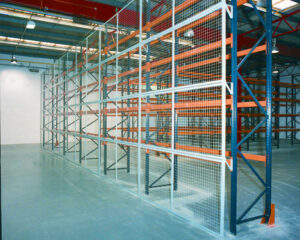
The mesh is usually made from strong, welded steel and can be made to fit different sizes of racks.
Key Features of Anti-Collapse Mesh
- Full rear rack protection
- Durable steel construction
- Excellent visibility and airflow
- Compatible with most pallet racking systems
- Custom sizes available
- Easy installation and maintenance
Because of its comprehensive coverage, anti-collapse mesh has become one of the most recommended safety upgrades in modern warehouse racking solutions.
What Are Back Stop Beams?
Back stop beams are horizontal steel beams installed behind pallets on a racking system. Their primary purpose is to stop pallets from being pushed too far backward during loading operations.
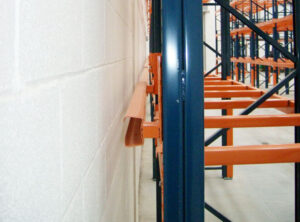
Unlike anti-collapse mesh, back stop beams only provide a stopping point for pallets and do not create a complete protective barrier.
Key Features of Back Stop Beams
- Simple design
- Cost-effective installation
- Prevents pallet overhang
- Suitable for uniform palletized loads
- Low maintenance requirements
Many facilities use backstop beams as a basic level of warehouse rack protection in the UAE, particularly when handling standardized pallet loads.
Anti-Collapse Mesh vs Back Stop Beams: Detailed Comparison
1. Level of Protection
Anti-Collapse Mesh
Anti-collapse mesh provides complete rear protection across the entire rack face. It prevents:
- Loose cartons from falling
- Pallet overhang accidents
- Small inventory items from slipping through gaps
- Product displacement during loading
Back Stop Beams
Back stop beams only stop pallets from moving beyond a certain point. They cannot prevent:
- Individual cartons from falling
- Loose products from slipping through
- Debris dropping into adjacent aisles
Winner: Anti-Collapse Mesh
For comprehensive protection, anti-collapse mesh for racking offers a significantly higher safety level.
2. Worker Safety
Employee safety is always the most important thing in warehouse work.
Anti-Collapse Mesh
The mesh acts as a physical barrier between stored goods and pedestrian areas, reducing the risk of injuries caused by falling products.
Back Stop Beams
While backstop beams help position pallets correctly, they do not eliminate the risk of loose items falling from storage levels.
Winner: Anti-Collapse Mesh
For warehouses with regular foot traffic, anti-collapse mesh provides superior worker protection.
3. Inventory Protection
Damaged inventory results in direct financial losses.
Anti-Collapse Mesh
Protects both palletized and non-palletized products from falling and sustaining damage.
Back Stop Beams
Only protects against pallet overtravel. Individual products remain vulnerable.
Winner: Anti-Collapse Mesh
The wider range of protection makes it a favorite choice for businesses looking for better warehouse rack protection in the UAE.
4. Compatibility with Different Storage Types
Warehouses often store:
- Cartons
- Pallets
- Plastic containers
- Mixed inventory
- Irregular-shaped products
Anti-Collapse Mesh
Works effectively with virtually all storage types.
Back Stop Beams
Best suited for standardized pallets.
Winner: Anti-Collapse Mesh
Its ability to adapt makes it a great choice for modern and flexible warehouse storage systems.
5. Installation and Customization
Anti-Collapse Mesh
Can be customized according to:
- Rack height
- Rack width
- Load requirements
- Safety standards
Back Stop Beams
They are usually simpler and faster to set up, but they do not allow much customization.
Winner: Depends on Requirements
For simplicity, backstop beams are easier. For tailored protection, anti-collapse mesh is superior.
6. Long-Term Value
Warehouse managers should look at all the costs involved over time instead of just the money needed to start.
Anti-Collapse Mesh
Although the upfront cost may be higher, it reduces:
- Product damage
- Workplace accidents
- Insurance claims
- Operational downtime
Back Stop Beams
Lower initial investment, but may not provide sufficient protection in high-risk environments.
Winner: Anti-Collapse Mesh
Over time, anti-collapse mesh often delivers better return on investment.
When Should You Choose Anti-Collapse Mesh for Racking?
Anti-collapse mesh is ideal when:
- Employees work behind rack systems
- Loose cartons are stored
- Multiple product sizes are handled
- Warehouse safety standards are a priority
- Inventory value is high
- Rack systems are located near workstations
These environments benefit greatly from enhanced warehouse rack protection UAE systems.
When Should You Choose Back Stop Beams?
Back stop beams may be suitable when:
- Only standardized pallets are stored
- Budget is the primary concern
- The facility has minimal pedestrian traffic
- Basic pallet positioning is the main objective
However, many warehouse operators eventually upgrade to anti-collapse mesh as storage demands grow.
Why UAE Warehouses Are Increasingly Choosing Anti-Collapse Mesh
The logistics, manufacturing, retail, and e-commerce sectors in the UAE continue to expand rapidly. With higher storage density comes increased responsibility for workplace safety.
Warehouse workers are starting to choose anti collapse mesh for their racking systems because it:
- Enhances compliance with safety regulations
- Reduces product loss
- Improves employee safety
- Supports efficient warehouse operations
- Provides long-term protection for racking investments
As a result, anti-collapse mesh has become an essential component of modern warehouse racking solutions throughout the UAE.
Expert Recommendation
Based on industry best practices and warehouse safety requirements, anti-collapse mesh generally offers greater protection than backstop beams.
Back stop beams are still helpful for placing pallets, but they don’t offer the full protection that anti-collapse mesh does. Warehouses that deal with a wide variety of items, a lot of foot traffic, or expensive goods get the most benefit from installing anti-collapse mesh systems.
The ideal approach for many facilities is to integrate anti-collapse mesh with other warehouse rack protection UAE measures, such as rack guards, column protectors, safety barriers, and load signage.
Conclusion
When comparing anti-collapse mesh for racking and back stop beams, the decision ultimately depends on your warehouse’s operational needs and safety objectives.
Back stop beams offer a simple and cost-effective way to control pallet placement. However, anti-collapse mesh provides a higher level of protection by preventing pallets, cartons, and loose products from falling behind racks.
For businesses seeking safer workplaces, reduced inventory damage, and more reliable warehouse racking solutions, anti-collapse mesh is often the better long-term investment.