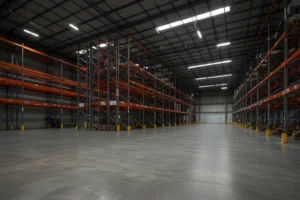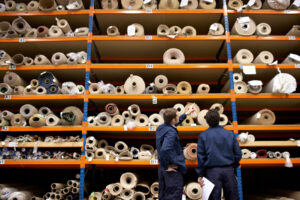
Tyres should be stored in a clean, dry, cool and well ventilated warehouse, away from direct sunlight, heat, chemicals, oils, moisture and ozone producing equipment. The correct storage position depends on whether tyres are mounted on rims, unmounted, large/heavy, or intended for short term or long term storage.
For UAE warehouses, tyre storage should also account for rack load capacity, forklift access, fire protection, aisle clearance and applicable local safety requirements.
How Should Tyres Be Stored in a Warehouse?
Tyres should generally be stored indoors on suitable racks or storage systems that prevent deformation, damage and unnecessary compression.
For effective tyre warehouse storage:
- Keep tyres away from direct sunlight and UV exposure.
- Maintain a clean, dry and ventilated storage area.
- Keep tyres away from oils, fuels, solvents and chemicals.
- Avoid ozone producing equipment such as certain electric motors and welding equipment.
- Use suitable racks, shelving or pallets
- Avoid unstable or excessively high stacks
- Keep heavy tyres at suitable floor or low rack positions
- Maintain clear forklift & emergency access
- Follow the tyre manufacturer storage recommendations
The storage method should be selected according to tyre dimensions, weight, quantity, storage duration and handling requirements.
Why Is Proper Tyre Storage Important?
Proper tyre storage helps protect rubber quality, reduce deformation and make warehouse inventory safer and easier to manage.
Tyres can deteriorate when exposed to unsuitable environmental conditions for extended periods. Poor storage can also create warehouse problems such as unstable stacks, blocked aisles, difficult picking and excessive handling.
For small businesses, a properly organized tyre storage rack can provide both product protection and better use of available warehouse space.
Should Tyres Be Stored Vertically or Horizontally?
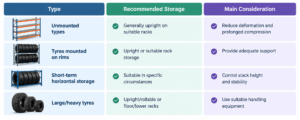
It depends on the type of tyre and how long it will be stored. Upright storage is generally preferred for many unmounted tyres during longer term storage, while horizontal stacking can be suitable for certain short term applications.
How Should Unmounted Tyres Be Stored?
Unmounted tyres should generally be stored upright on suitable racks for longer term storage.
Avoid creating excessive compression by placing too many tyres in a tall or unstable stack. Organizing tyres vertically can also make different sizes and SKUs easier to identify.
How Should Tyres Mounted on Rims Be Stored?
Tyres mounted on rims can generally be stored upright or using an appropriate single layer rack arrangement, depending on the tyre, rim and storage system.
The rack must be capable of safely supporting the combined load of the tyre and rim.
When Is Horizontal Stacking Appropriate?
Horizontal stacking can work well for some temporary storage needs, as long as the stack is steady and doesn’t go higher than the suggested limit.
For example, manufacturer guidance may specify limits for particular short term stacking methods.
What Is the Best Racking System for Tyre Storage?
The best tyre racking system UAE depends on tyre size, weight, quantity, warehouse height, storage orientation and the equipment used to move the tyres.
Common options include:
Tyre Racking Systems
Dedicated tyre racks are useful when a warehouse store multiple tyre sizes and needs organized, accessible storage.
They can help businesses:
- Use vertical space.
- Separate tyre sizes.
- Improve stock visibility.
- Reduce floor congestion.
- Make picking easier.
- Support better inventory organization.
Shelving Systems
Shelving can be suitable for smaller or lighter tyres where manual picking is practical.
Pallet Racking
Pallet racking can be considered for larger tyre operations where tyres are stored on pallets and handled using forklifts. However, the rack must be designed around the actual load and pallet dimensions rather than simply selecting a rack based on available height.
What Warehouse Conditions Are Best for Tyres?
The ideal tyre storage area is clean, dry, cool, well ventilated and protected from direct sunlight, heat, chemicals and ozone.
Why Should Tyres Be Protected From Sunlight?
Tyres should be protected from direct sunlight because prolonged UV exposure can contribute to rubber deterioration.
Indoor storage away from direct sunlight is therefore preferable for warehouse tyre storage.
Why Should Tyres Be Kept Away From Ozone?
Tyres should be kept away from ozone producing equipment because ozone can contribute to deterioration of rubber materials.
Potential sources include:
- Electric motors
- Transformers
- Welding equipment
- Certain electrical equipment
Why Should Tyres Be Kept Away From Chemicals?
Tyres should not be stored next to oils, fuels, solvents or other chemicals that could affect rubber materials.
A dedicated tyre storage area should therefore be separated from chemical and petroleum product storage wherever practical.
How Should You Organize Tyres for Easy Stock Rotation?
Organize tyre by size, SKU, product type and stock date, and use FIFO (First In, First Out) where appropriate.
A simple warehouse layout could follow:
Tyre size → Brand/product → SKU → Stock date → Rack location
For example:
Rack A01 → 205/55 R16 → SKU 001 → Older stock
Rack A02 → 225/65 R17 → SKU 002 → Newer stock
Clear rack labels make it easier for warehouse staff to identify and retrieve the correct tyre.
How High Can Tyres Be Stacked in a Warehouse?
There is no single universal stacking height for every tyre or warehouse. The safe height depends on the tyre type, storage method, rack design, stability, fire requirements and applicable regulations.
For example, manufacturer guidance can specify a particular height for a specific short term horizontal stacking method.
In Dubai, applicable PCFC requirements also need to be considered for tyre storage, including requirements relating to storage systems, fire protection and rack safe working loads.
Therefore, do not choose a stacking height simply because there is unused vertical space.
What Are the Biggest Tyre Storage Mistakes to Avoid?
The biggest tyre storage mistakes are exposure to sunlight and chemicals, poor ventilation, excessive stacking, overloaded racks and inadequate warehouse access.
Avoid:
- Storing tyre’s in direct sunlight
- Keeping tyres beside welding equipment
- Storing tyres next to oil or chemical
- Creating unstable stack
- Exceeding rack load capacity
- Blocking fire equipment
- Blocking emergency route
- Mixing tyre sizes without label
- Ignoring stock rotation
- Manually moving tyres that require mechanical handling
What Safety Requirements Should You Consider for Tyre Storage?
Tyre storage should be planned around rack capacity, fire protection, safe handling, forklift movement and emergency access.
For UAE warehouses, operators should check the requirements applicable to their location and facility.
For example, Dubai PCFC requirements address tyre warehouse design, fire protection provisions, storage systems, material handling equipment and rack Safe Working Loads.
Important check include:
- Rack Safe Working Load
- Floor capacity
- Forklift access
- Aisle width
- Fire protection
- Emergency access
- Rack stability
- Tyre weight
- Handling equipment
- Storage height
Never exceed the manufacturers rated rack capacity.
How Can AddMore Help With Tyre Storage Racking?
AddMore International can help businesses plan tyre storage racking around their available warehouse space, tyre dimensions, storage capacity and handling requirements.
A practical tyre racking assessment should consider:
- Warehouse length and width
- Clear ceiling height
- Tyre diameter
- Tyre width
- Tyre weight
- Number of tyres
- Number of SKUs
- Mounted or unmounted tyres
- Required storage orientation
- Forklift or material handling equipment
- Required aisle space
- Future inventory growth
- Safety and fire requirements
This approach helps ensure that the tyre racking system UAE businesses purchase matches their actual warehouse operation rather than being selected only on price.
What Should You Check Before Buying Tyre Racking?
Before buying tyre storage racks, check the tyre dimensions, total load, storage orientation, available warehouse space, handling equipment, rack capacity and future storage requirements.
Use this quick checklist:
☐ Measure tyre diameter and width
☐ Record tyre weight
☐ Calculate total storage quantity
☐ Identify different SKUs
☐ Decide vertical or horizontal storage
☐ Check warehouse ceiling height
☐ Check forklift requirements
☐ Calculate aisle requirements
☐ Confirm rack Safe Working Load
☐ Review fire safety requirements
☐ Plan stock rotation
☐ Allow for future expansion
FAQ’s
-
How should tyres be stored in a warehouse?
Store tyres in a clean, dry, cool and ventilated area away from sunlight, heat, chemicals, oils and ozone-producing equipment. Use suitable racks or storage systems based on tyre type and warehouse requirements.
-
Should tyres be stored vertically or horizontally?
Unmounted tyres are generally suitable for upright storage on appropriate racks, particularly for longer term storage. Horizontal storage can be suitable for certain short term applications.
- How should unmounted tyres be stored?
Unmounted tyres should generally be stored upright on suitable racks and protected from excessive compression, sunlight, moisture and chemicals.
- How should tyres mounted on rims be stored?
Mounted tyres can generally be stored upright or in an appropriate supported rack arrangement, depending on their size, weight and storage system.
- What is the best racking system for tyre storage?
A dedicated tyre racking system UAE is often suitable for organized tyre inventory, while shelving or pallet racking may be better for specific warehouse layouts and handling requirements.
- Can tyres be stored outside?
Outdoor storage is generally not preferred for long-term tyre inventory. Tyres should be protected from sunlight, moisture and weather exposure.
- How should tyres be protected from sunlight?
Store tyres indoors away from direct sunlight and UV exposure whenever possible.
-
Why should tyres be kept away from electric motors?
Some electrical equipment can generate ozone, and ozone can contribute to rubber deterioration over time.
-
How high can tyres be stacked?
The safe stacking height depends on the tyre, storage method, stability, warehouse design and applicable safety requirements. Do not use a single height as a universal rule.
- How should a tyre warehouse use FIFO?
Use FIFO by identifying older suitable stock and positioning it for issue before newer stock where appropriate. Clearly labelled rack locations make this easier.
-
What should I consider when choosing tyre storage racks?
Consider tyre size, tyre weight, quantity, SKU count, storage orientation, ceiling height, rack load capacity, forklift access, aisle space, fire requirements and future expansion.
-
Are tyre storage racks suitable for forklifts?
Yes, tyre storage systems can be designed for forklift operations, but the rack layout, clearances, load capacity and handling equipment must be appropriate for the application.
-
How can I maximize tyre storage space?
Use suitable vertical storage, organize tyres by SKU and size, minimize unnecessary floor storage and select adjustable or multi level racking where appropriate.
- How often should stored tyres be inspected?
Stored tyres should be checked periodically for visible damage, deformation and deterioration, with the inspection frequency based on the tyre manufacturer’s recommendations, storage conditions and storage duration.
Conclusion
So, how should tyres be stored in a warehouse?
The simple answer is:
Keep tyres indoors, clean, dry, ventilated and protected from sunlight, heat, chemicals and ozone. Choose vertical or horizontal storage according to the tyre type and storage period, use properly rated tyre storage racks, maintain safe access and follow applicable UAE fire and warehouse-safety requirements.
For small businesses and growing warehouses, the most effective solution is not necessarily the rack with the highest capacity. The right tyre racking system is the one designed around your tyre dimensions, inventory, available space, handling method and future requirements.