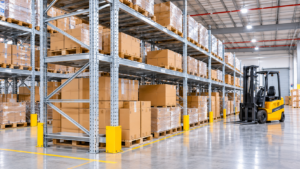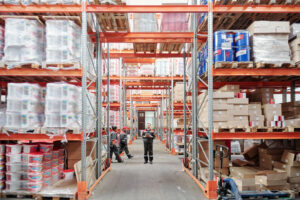
Warehouse safety barriers and guide rails serve related but different purposes. Warehouse safety barriers protect people, equipment, and storage areas from vehicle-related hazards, while guide rails direct vehicles or material-handling equipment along a defined route. The right choice depends on your warehouse layout, forklift movements, pedestrian traffic, and the risks you need to control.
If you run a warehouse in the UAE, forklifts may move between pallet racks, workers may pick orders, and deliveries may arrive throughout the day. Even a small mistake in this busy environment can damage equipment or put someone at risk.
So, should you install warehouse safety barriers or guide rails?
Let’s look at the differences, where each option works best, and what to consider before choosing one.
What Are Warehouse Safety Barriers?
Warehouse safety barriers are physical protective systems installed to separate people, vehicles, equipment, and other vulnerable areas. Depending on their design, they may consist of steel rails, impact-resistant polymer barriers, bollards, or other protective structures.
Their main purpose is to reduce the likelihood or consequences of collisions in areas where forklifts and pedestrians share space.
For example, imagine a forklift operating beside a packing station. A worker could accidentally step into its travel path while moving a carton. A properly selected and installed safety barrier can help keep pedestrian areas separate from vehicle routes.
What Do Warehouse Safety Barriers Protect Against?
Warehouse safety barriers may be used to help protect:
- Pedestrian walkways near forklift routes.
- Pallet racking and rack-end areas.
- Machinery, electrical panels, and other vulnerable equipment.
- Building columns, walls, and doorways.
- Loading and unloading areas where vehicles and workers interact.
However, not every barrier is designed to withstand a vehicle collision. For instance, a lightweight pedestrian railing should not automatically be treated as a heavy-duty forklift impact barrier.
Before purchasing, check the product’s intended application, impact performance, installation requirements, and suitability for the specific hazard.
What Are Guide Rails in a Warehouse?
Warehouse guide rails are rails installed to help guide vehicles or material-handling equipment along a defined path. Their exact purpose depends on the system.
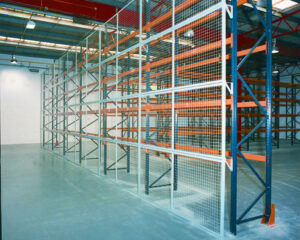
In very narrow aisle warehouses, for example, steel guide rails may run along aisle sides to guide compatible forklifts or order-picking equipment. This helps equipment stay on the intended route and reduces the risk of contacting the racking.
Guide rails can also be used elsewhere to direct movement or maintain alignment.
How Do Guide Rails Help Control Movement?
Consider a warehouse where a forklift must travel through a narrow aisle between two rows of pallet racking.
There is very little room for steering errors. If the forklift moves too close to the rack, it could strike an upright or damage stored goods.
A suitable guide rail system can help keep the vehicle aligned with the aisle. The equipment, rails, and racking must be designed and installed as a compatible system.
Guide rails are not automatically pedestrian barriers, and you shouldn’t assume every type provides adequate protection against every impact. Their suitability depends on the system’s design and intended use.
What Is the Difference Between Warehouse Safety Barriers and Guide Rails?
The main difference is their intended function.
Warehouse safety barriers are generally selected to protect people, equipment, or defined areas from hazards. Guide rails are generally selected to direct or constrain movement along a specific route.
The terms can overlap because some rail systems provide both guidance and protection. That is why it is important to evaluate the actual product rather than relying on its name alone.
For example, a pedestrian safety barrier beside a forklift route is intended to keep people and vehicles separated. A guide rail in a very narrow aisle helps compatible handling equipment follow the aisle correctly.
Neither system replaces safe operating procedures, suitable training, or a proper warehouse risk assessment.
When Should You Choose Warehouse Safety Barriers?
Consider warehouse safety barriers when you need to separate people from moving vehicles or protect vulnerable equipment and infrastructure.
1. When Pedestrians and Forklifts Share Nearby Space
If workers regularly walk alongside forklift routes, physical separation may help reduce collision risk.
For example, a distribution warehouse may use barriers to define a pedestrian route between the dispatch area and the staff entrance.
The barrier layout should account for safe crossing points, visibility, emergency access, and the space required for vehicle movements.
2. When You Need to Protect Pallet Racking
Forklifts manoeuvring near rack ends and aisle corners can strike racking uprights.
Suitable rack protection or impact barriers may help reduce the risk of damage. However, select the protective system for the anticipated impact and install it so it does not compromise the racking arrangement.
A barrier is not a substitute for inspecting and repairing damaged racks.
3. When Machinery or Building Structures Are at Risk
Forklift collisions can damage machinery, electrical installations, columns, and other fixed assets.
A suitably designed barrier or bollard system can help protect these vulnerable areas. The required protection will depend on the vehicle, operating conditions, and the consequences of a collision.
When Are Guide Rails the Better Choice?
Guide rails may be a better solution when equipment must follow a specific path or stay aligned in a restricted space.
1. When Operating in Very Narrow Aisles
Very narrow aisle (VNA) warehouses use specialised layouts to maximise storage density. Guide rails may help compatible forklifts or order-picking equipment travel along narrow aisles without contacting the racking.
Before installation, confirm compatibility with the vehicle and racking manufacturers, including aisle dimensions and the required clearances.
2. When Equipment Must Follow a Defined Route
Some warehouse operations require equipment to travel repeatedly along a fixed path.
A suitable guide-rail arrangement can direct movement and reduce unwanted deviation. The right system depends on the vehicle type and the operation being performed.
3. When Protecting Rack Alignment During Vehicle Movement
In a well-designed narrow-aisle installation, guide rails can help keep handling equipment aligned with the storage aisle.
However, guide rails should not be installed as a substitute for impact protection where workers, machinery, or other assets need separate protection.
How Do You Choose the Right Warehouse Safety System in the UAE?
The best solution begins with the hazard, not the product catalogue.
Here are the main factors to consider before buying.
1. Identify What Needs Protection
First, decide whether the main concern is pedestrian safety, forklift impact, rack protection, or vehicle guidance.
A pedestrian route beside a busy loading area may require a different solution from a narrow aisle used by specialised handling equipment.
2. Review the Warehouse Layout
Identify forklift routes, aisle widths, turning areas, blind corners, pedestrian crossings, and vulnerable equipment.
A physical walk-through can help you understand where collisions are most likely and where protective equipment would be most useful.
3. Check the Required Impact Performance
If the system is intended to protect against vehicle collisions, ask the supplier for evidence of its impact performance and intended application.
Consider the vehicle type and weight, operating speed, impact direction, and the consequences of a collision. Do not assume that a product is forklift-rated simply because it is made of steel.
4. Consider Materials and Installation
Steel and impact-resistant polymer systems may suit different applications. Compare durability, maintenance needs, environmental exposure, and the consequences of impact.
Check the floor slab, anchoring arrangements, fixing requirements, and clearances. Follow the manufacturer’s specifications and applicable local requirements.
5. Plan for Access and Maintenance
Barriers should not block fire exits, emergency equipment, or necessary access routes.
Where access openings are needed, consider suitable gates or removable sections that preserve protection when closed. Inspect the system regularly and after any significant impact.
What Common Mistakes Should You Avoid?
Even a good safety product can be ineffective if the wrong system is chosen or installed poorly.
Avoid these common mistakes:
- Choosing based on appearance alone: A rail that looks strong may not meet the required impact performance.
- Confusing guidance with protection: A vehicle guide rail may not provide the protection needed for a pedestrian walkway.
- Ignoring floor fixings: The floor and anchoring system must be suitable for the intended installation.
- Blocking access routes: Barriers should be planned around emergency exits, fire equipment, and normal warehouse operations.
- Forgetting maintenance: Inspect for loose fixings, damaged rails, corrosion, and signs of impact.
- Treating barriers as the only safety measure: Clear traffic routes, trained operators, appropriate speed controls, and regular risk assessments remain essential.
Frequently Asked Questions
1. What is the difference between warehouse safety barriers and guide rails?
Safety barriers help protect people, equipment, and designated areas from hazards. Guide rails help guide vehicles or handling equipment along a defined route. Some systems may overlap in function, so the product’s intended use matters.
2. What are warehouse safety barriers used for?
They separate pedestrians from vehicles and protect areas such as pallet racking, machinery, building columns, and loading zones.
3. What are guide rails used for in a warehouse?
Guide rails are used to guide compatible vehicles or material-handling equipment along defined paths. A common application is guiding specialised forklifts through very narrow aisles.
4. Can guide rails protect pedestrians from forklifts?
Not necessarily. Guide rails designed for vehicle guidance should not automatically be treated as pedestrian protection. Use a suitable pedestrian or impact barrier where the risk assessment identifies that requirement.
5. Which is better for a narrow-aisle warehouse?
Guide rails may be suitable for guiding compatible handling equipment through very narrow aisles. Safety barriers may still be needed to protect pedestrians, rack ends, and other vulnerable areas.
6. Can warehouse safety barriers protect pallet racking?
Suitable, correctly installed impact barriers can help protect racking from vehicle collisions. They must be selected for the anticipated hazard and must not compromise the racking system.
7. Can guide rails be installed in an existing warehouse?
Potentially, yes. The existing aisle dimensions, vehicle type, rack configuration, floor conditions, and manufacturer’s requirements must be checked before installation.
8. Do warehouse safety barriers need floor anchoring?
Many fixed barrier systems use floor anchors, but the exact requirements depend on the product design, expected impact, floor construction, and installation method. Follow the manufacturer’s specifications.
9. How often should barriers and guide rails be inspected?
Follow the manufacturer’s maintenance guidance and your site’s risk assessment. Check regularly for loose fixings, damage, corrosion, or movement, and inspect after an impact or suspected collision.
10. How do I choose warehouse safety barriers in the UAE?
Start by identifying the hazards, vehicle routes, pedestrian areas, and assets that need protection. Then assess the product’s intended use, impact performance, materials, floor fixings, installation requirements, and applicable local safety requirements.
Final Thoughts: Which Warehouse Safety System Should You Choose?
Warehouse safety barriers and guide rails are not interchangeable in every situation. Barriers are generally intended to protect people, equipment, and designated areas, while guide rails help control the movement of compatible vehicles along defined routes.
For many warehouses, the right approach may involve both systems: guide rails in narrow operating aisles and suitable safety barriers around pedestrian routes or vulnerable equipment.
Start with a clear assessment of your warehouse layout and the risks you need to control. Then choose a system appropriate to those hazards, and have a competent specialist check its design and installation.