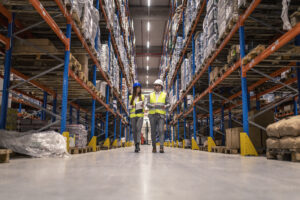
What if you could store more pallets without expanding your warehouse? For many businesses in Sharjah, making better use of existing warehouse space is becoming increasingly important as inventory grows and expansion is not always practical. Very Narrow Aisle (VNA) pallet racking in Sharjah storage system used in warehouses to fit more pallets in a smaller space. It does this by using narrower pathways for forklifts, which allows for more storage while still letting workers reach each pallet directly.
But VNA racking is more than simply making aisles narrower. It involves specialised handling equipment, careful warehouse planning and suitable floor conditions. At Addmore, we help businesses assess whether VNA racking suits their warehouse layout, equipment and inventory requirements. This guide explains how VNA pallet racking works, its benefits and applications, the factors that influence cost, and when it makes sense to choose it over other storage options.
What Is Very Narrow Aisle Pallet Racking?
Very Narrow Aisle pallet racking is a high density storage system designed to reduce the space required for forklift aisles. Compared with conventional pallet racking, VNA systems use significantly narrower operating aisles, allowing more of the warehouse footprint to be used for storage.
The exact aisle width depends on the material handling equipment, pallet dimensions, rack configuration and warehouse layout. Therefore, a VNA system should be designed around the specific requirements of each facility.
Unlike block stacking, VNA racking provides direct access to individual pallet locations. This makes it useful for warehouses that store multiple products and need organised access to different SKUs.
How Does VNA Pallet Racking Work?
VNA racking uses closely spaced rack rows served by specialised material handling equipment designed for narrow aisle operation. Depending on the warehouse, this may include turret trucks, specialised order pickers or combination trucks.
These machines can operate within narrow aisles and access pallets at varying storage heights without requiring as much turning space as conventional forklifts.
Many VNA installations also use guidance systems. Wire or rail guidance can help keep handling equipment aligned within the aisle, helping operators position equipment accurately during pallet handling.
Floor condition is another important consideration. Because VNA equipment operates close to racking and may operate at significant heights, floor levelness and surface condition must meet the requirements of the selected equipment and racking system. Corrective work may be necessary if the existing floor does not meet those requirements.
Benefits of VNA Pallet Racking
Better Use of Warehouse Space
VNA racking reduces the amount of floor area dedicated to forklift aisles. This can allow more of the existing warehouse footprint to be used for pallet storage.
Higher Storage Density
Closely positioned rack rows can create more pallet storage spaces within the same building area. This can help businesses increase their inventory capacity without having to expand their warehouse right away.
Direct Pallet Access
VNA systems give people access to each individual pallet position. This works well for warehouses that deal with different products. It is important to store and get pallets in and out on a regular basis.
Better Use of Vertical Space
VNA racking can help businesses make effective use of available warehouse height. The suitable rack height depends on the building structure, equipment capabilities and load requirements.
Organised Inventory
Designated pallet spots can simplify the process of finding and handling products. When paired with effective inventory management systems, well organized storage can enhance stock control.
What Our VNA Racking Assessment Checks
Selecting Very Narrow Aisle pallet racking in Sharjah requires more than simply reducing the width of warehouse aisles. At Addmore, we assess the warehouse environment, storage requirements and handling operations before recommending a VNA configuration. This helps ensure that the proposed system works efficiently with the available space and day-to-day warehouse activities.
Our VNA assessment considers:
- Warehouse dimensions: Available floor area, rack layout and aisle configuration.
- Clear ceiling height: Available vertical space for determining suitable rack height and storage levels.
- Pallet dimensions: Pallet length, width and load characteristics to determine appropriate rack configuration.
- Maximum pallet weight: Load requirements for selecting suitable rack components and capacities.
- Number of SKUs: Product variety and storage requirements to maintain organised pallet access.
- Required pallet positions: Current and future storage capacity needed by the business.
- Daily pallet movements: Inbound and outbound activity to determine whether the proposed VNA layout supports operational requirements.
- Existing forklift type: Available handling equipment and whether specialised narrow-aisle equipment may be required.
- Floor condition: Floor levelness and surface condition in relation to the selected racking and handling equipment.
- Rack height requirements: Required storage height based on available building height, pallet loads and equipment capabilities.
- Safety requirements: Rack protection, load capacities, aisle design and other safety considerations relevant to the installation.
By reviewing these factors before installation, Addmore can help businesses determine whether VNA pallet racking is appropriate for their warehouse and identify a configuration that balances storage density, pallet accessibility and operational requirements.
Applications of VNA Pallet Racking
VNA pallet racking is well suited to warehouses that store palletised goods and require regular access to individual storage locations.
Common applications include
- Distribution centres
- Logistics warehouses
- Manufacturing facilities
- Retail distribution
- E-commerce storage and fulfilment
- Spare parts warehouses
- General goods storage
- Temperature controlled facilities
It is particularly useful where businesses have multiple palletised products, limited floor space and sufficient building height.
Key Considerations Before Installing VNA Racking
VNA racking is not automatically suitable for every warehouse. Businesses should evaluate several factors before selecting the system.
Warehouse layout: The design should accommodate rack rows, narrow aisles, loading areas, pedestrian movement and other operational requirements.
Pallet size and load capacity: Rack dimensions and load ratings must match the pallets and products being stored. Accurate pallet dimensions and load weights are important during system design.
Forklift and guidance requirements: Handling equipment must match the aisle configuration and required rack height. Wire or rail guidance may also be appropriate depending on the system.
Floor condition: The current floor should be evaluated based on the needs of the chosen equipment and racking system. If it does not meet the required tolerances, some corrective work may be necessary.
Warehouse height: The height of the building must accommodate the suggested rack layout and the handling machinery.
Safety: Rack protection, load capacities, aisle design and operating procedures should comply with applicable requirements and manufacturer specifications.
How Much Does VNA Pallet Racking Cost?
There is no fixed price for a VNA system because each warehouse has different requirements. The overall investment can include:
- Racking components
- Rack height and configuration
- Number of pallet positions
- Specialised handling equipment
- Guidance systems
- Floor preparation
- Installation
- Safety accessories
A complete system assessment provides a more realistic understanding of the total investment than a racking only quote.
VNA Racking vs Conventional Pallet Racking
| Factor | Conventional Pallet Racking | VNA Pallet Racking |
| Aisle requirement | Wider aisles | Narrower aisles |
| Equipment | Standard or reach forklifts | Specialised narrow aisle equipment |
| Guidance | Usually not required | May use wire or rail guidance |
| Storage density | Moderate | Higher potential density |
| Pallet access | Direct | Direct |
| Floor requirements | Depends on layout | More demanding in many applications |
| Initial investment | Generally lower | Generally higher |
| Best suited for | Flexible layouts | Space constrained storage |
Neither system is automatically better. The right choice depends on warehouse space, inventory requirements, handling equipment, budget and operating priorities.
When Should You Choose VNA Pallet Racking?
VNA pallet racking is worth considering when warehouse floor space is limited but direct access to individual pallets is still important. It can be a strong option for businesses with sufficient building height, multiple SKUs, and a need to increase storage capacity without expanding their facility.
VNA may be more suitable than conventional pallet racking when reducing aisle space can create meaningful additional storage capacity. However, it may not be the best choice for every operation. Businesses with very high pallet movement, limited building height, unsuitable floor conditions, or a need for highly flexible forklift movement should also compare other storage options.
Before choosing VNA, look at the space available in your warehouse, including floor area and ceiling height. Also consider the number of pallets and SKUs you handle, how often you need to access them, the equipment you already use, and your budget. The system should give you more storage space while still working well with your day-to-day warehouse operations.
Planning VNA pallet racking in Sharjah? Share your warehouse dimensions, pallet size, pallet weight and required storage capacity with Addmore. Our team can assess the layout and recommend a suitable configuration.